Fine-grained cycle parking starts with two spaces
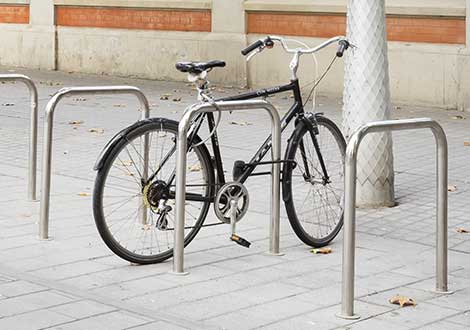
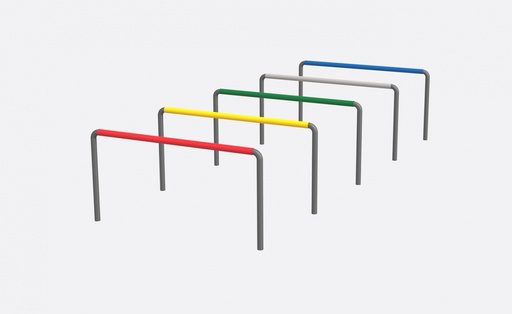
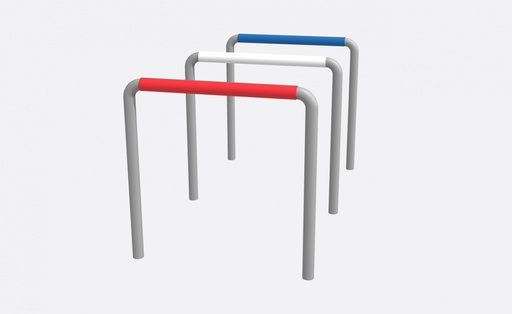
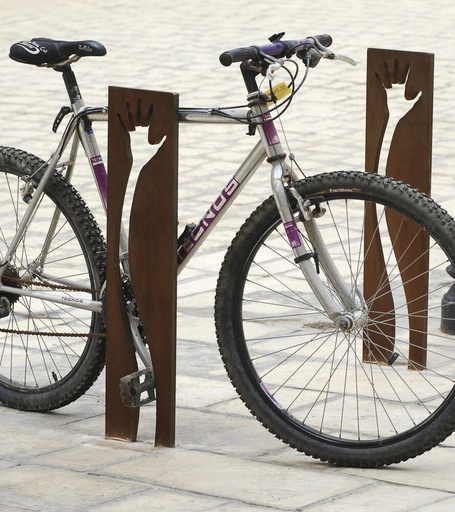
Not every spot within a neighbourhood or site requires the same parking capacity. At quieter nodes, near a side entrance, along a footpath or at the edge of a courtyard, a small number of spaces is sufficient. The Larus Triângulo 2 modules responds to that need with room for two bicycles in a compact bicycle rack that is chosen deliberately as part of a larger whole.
Protected steel in a forged texture
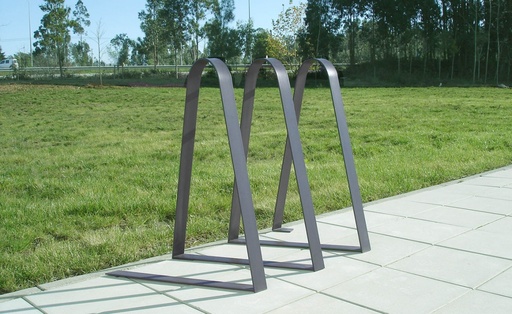
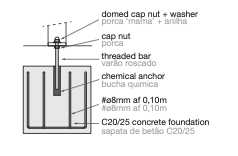
The steel frame carries an Enamel Forge paint layer that replicates the appearance of wrought iron. Beneath that finish, a metallisation layer shields the material against rust and weathering. At locations with lower bicycle turnover, where visual integration outweighs wear resistance under peak loads, this cycle stand retains its well-kept appearance for years without frequent maintenance.
Two arches as a modular starting point
Francisco Providência designed the Triângulo as a hot-pressed steel profile that repeats in a triangular form. With two modules, that repetition remains legible and creates a clearly marked parking spot at a smaller scale. Bicycles rest by their frame against the arch, leaving rims and spokes free from stress. The strength of this format lies in its combinability: a Triângulo 2 modules can be coupled with a larger 3- or 4-module variant, so the total capacity at each location is precisely matched to the expected demand.
Point solution within a coherent network
Distributing several smaller elements across a site or route creates a fine-grained network of cycle parking spaces, closer to the destinations they serve. Within the Larus Design range, the Triângulo shares its design language and finish with seating elements and litter bins, ensuring that each parking point forms part of a visually coherent whole.